
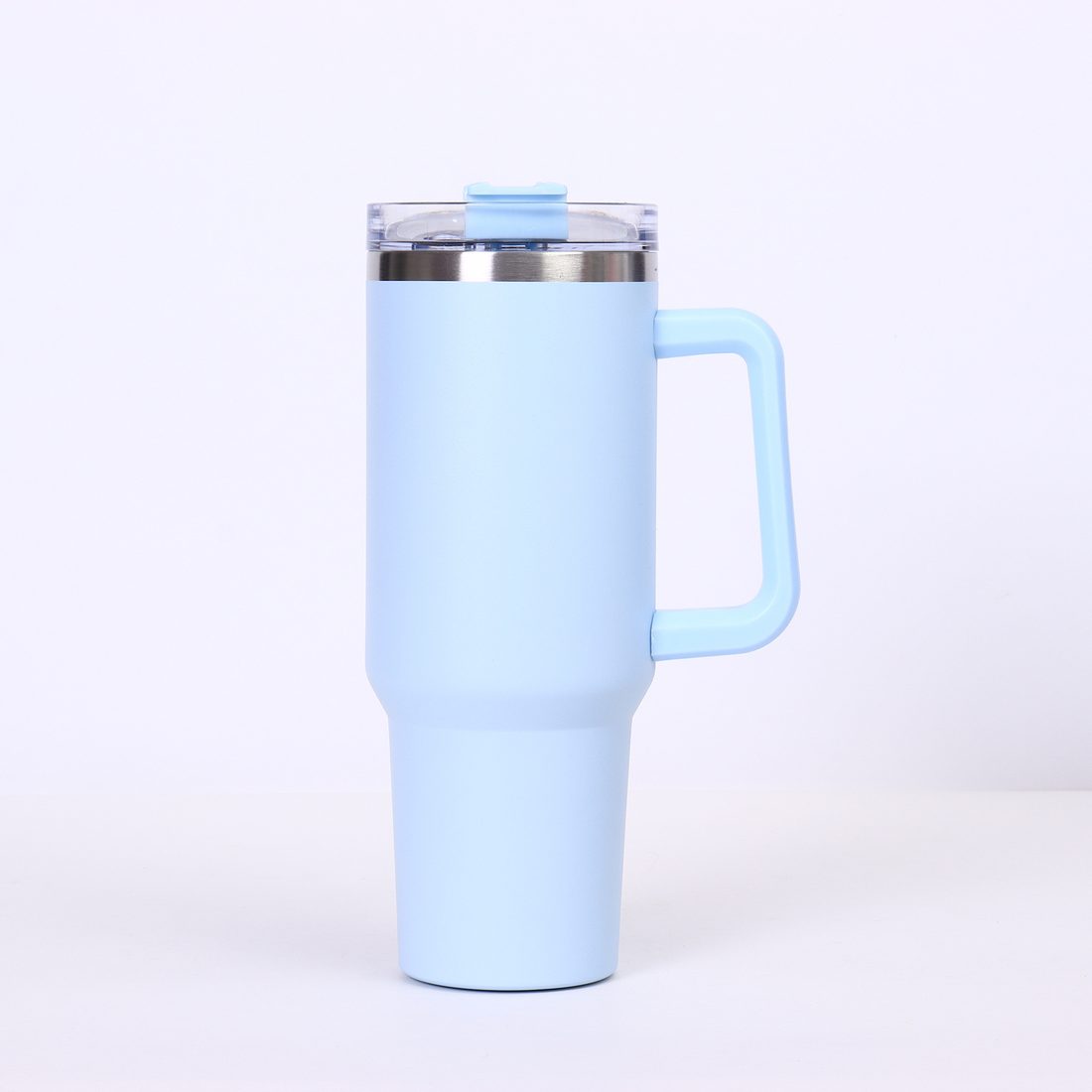
MOQ explained: how minimum order quantities work for custom tumblers
Why drinkware factories quote 3,000 pcs per colour — and the four ways to start smaller without paying tooling prices.
Read article →
A vacuum tumbler is two walls of stainless steel with the air pulled out between them. With no air to conduct heat, drinks stay cold or hot far longer than in a single-wall cup. Almost every quality problem in this category comes from that vacuum seal, or from the lid.
Ask for a hot-water test on a sample per batch: fill with near-boiling water, close the lid and check that the outside of the body stays comfortable to hold. Then a leak test: fill, seal and shake. For coated units, ask for an adhesion test and a dishwasher cycle test. None of these require a laboratory and all three catch the defects that generate returns.
Only claim what you have tested, on the product you actually ship. If you have not run a hold-time test, do not print “keeps cold for 24 hours”. Buyers and marketplaces do check, and a false claim on a box is far more expensive than the test that would have supported a true one.
Why drinkware factories quote 3,000 pcs per colour — and the four ways to start smaller without paying tooling prices.
Read article →
A practical comparison of the five decoration methods used on stainless steel tumblers — cost, durability, colour range and when each one fails.
Read article →
From colour box to carton mark: the packaging decisions that affect your landed cost, your marketplace photos and your damage rate.
Read article →